If you’ve been watching the Tampa Bay real estate market, you already know the headline numbers are impressive. But for investors eyeing the short-term rental (STR) space, the real question isn’t whether Tampa is popular — it’s whether there’s still money to be made.
The short answer: yes, but only if you know what you’re doing. This isn’t a market for passive, hands-off investments. It’s a dynamic environment where strategic planning and a focus on guest experience dictate success.
Here’s a grounded look at what the Tampa Bay STR market actually looks like in 2026, who’s winning, and where the real opportunities lie.
TL;DR
Tampa Bay’s short-term rental market in 2026 offers significant investment opportunities due to record-breaking tourism, but it’s highly competitive. Success hinges on strategic amenity investment in high-yield, non-premium neighborhoods, rather than relying on location alone, and a thorough understanding of local regulations.
—
Tampa Bay Tourism is Breaking Records — Why That Matters for STR Investors
Yes, record-breaking tourism in Tampa Bay directly fuels a robust and growing demand for short-term rentals, making the market fundamentally strong for investors.
The demand side of the equation has never been stronger. Tampa Bay closed fiscal year 2025 with more than $1.2 billion in taxable hotel revenue — the highest total in the region’s 30-year recorded history. Tourism Development Tax collections topped $70 million for the first time ever.
Zoom out statewide and the picture is even more striking: Florida welcomed 143.3 million visitors in 2025, cementing its position as the number one domestic travel destination in the country. What does this sustained growth mean for your potential investment?
For 2026, the pipeline is loaded. Major conventions are booked every month of the year. Events like the NHL Stadium Series at Raymond James Stadium are already generating bookings. Tampa’s draw isn’t just beaches — it’s a year-round combination of professional sports, conventions, Busch Gardens, the Florida Aquarium, Gasparilla, and one of the most walkable urban waterfronts in the South.
What does this mean for STR investors? Demand is real, diversified, and growing. The fundamentals that drive vacation rental revenue — consistent visitor traffic, strong shoulder seasons, and diverse traveler types — are firmly in place. This provides a solid foundation for those looking to enter the Tampa Bay short-term rental market.
The Market Has Matured: Why Average Isn’t Enough Anymore
While demand is strong, the Tampa Bay short-term rental market has matured with 3,000-3,800 active listings, meaning average properties now deliver insufficient returns for most investment goals.
Here’s where smart investors need to pump the brakes on the hype. The Tampa Bay STR market now has approximately 3,000–3,800 active listings, with year-over-year listing growth exceeding 20%. That’s a competitive market. And the guests booking in this market have options — lots of them.
The market-wide averages reflect this saturation:
- Average annual revenue: $58,500
- Average nightly rate: $310/night
- Average occupancy rate: 54.31%
Those numbers don’t support most investment theses on their own. A property generating $58K per year isn’t going to cash-flow on a $600,000 acquisition. This average performance highlights the need for a more strategic approach to ensure profitability in a crowded field.
But here’s the thing: those averages are dragged down by a large number of underperforming listings. The investors who’ve cracked the Tampa STR market aren’t playing the average game. They’re playing a completely different one.
What the Top Performers Are Actually Doing: The “Private Resort” Model
Top-performing Tampa Bay short-term rentals differentiate themselves by offering luxury, private resort-like experiences with extensive amenities, catering to multi-family groups willing to pay premium rates.
The top tier of Tampa Bay vacation rentals — properties generating $200,000 or more per year — tells a very different story. There are currently 167 listings in this category, averaging:
- $248,207 in annual revenue
- 60.93% occupancy rate
- $1,233 average nightly rate
What separates these properties from the rest of the market? They aren’t just vacation rentals. They’re private resorts. These properties are meticulously designed and equipped to offer an experience far beyond a standard rental.
The amenity packages driving top-tier bookings in Tampa Bay right now include:
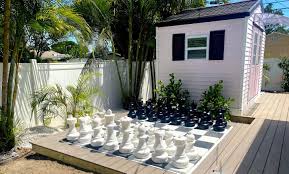
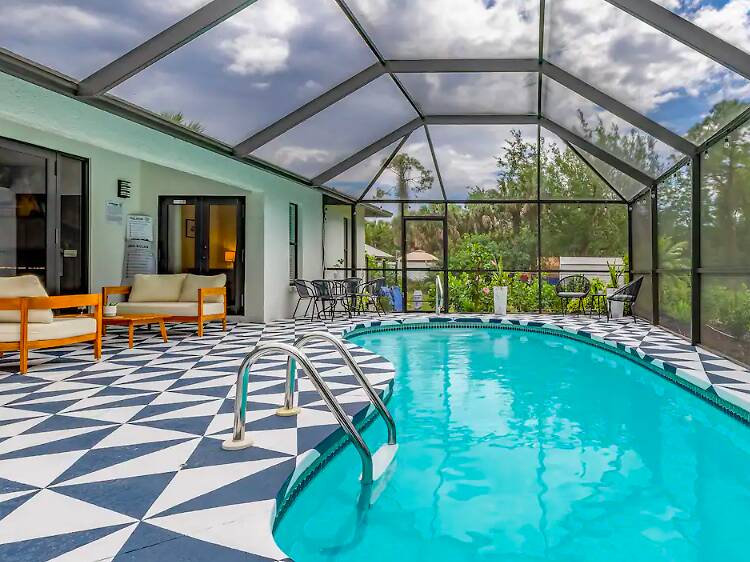
- Heated pools and spas: Essential for year-round enjoyment.
- Game rooms: Featuring pool tables, arcade machines, and entertainment systems.
- Pickleball courts: One of the fastest-growing STR amenity draws in the country.
- Waterslides and splash pads: Especially appealing to families with children.
- Outdoor kitchens and resort-style lounging areas: Enhancing the outdoor living experience.
- Golf simulators and putting greens: Catering to niche interests and luxury travelers.
These properties are designed for multi-family groups — two or three families traveling together, splitting the cost of a $1,200/night rental that feels like a luxury resort but costs less than booking separate hotel rooms. This specific target audience is willing to pay a premium for a consolidated, high-end experience.
If you’re thinking about the Tampa STR market as a “buy a house and list it on Airbnb” opportunity, the data suggests you’ll be disappointed. If you’re thinking about it as a hospitality business that requires real investment in the guest experience, the returns are legitimately exceptional.
The Mid-Tier: A Strong Backbone for Strategic Investors
For investors not aiming for ultra-luxury, the mid-tier market in Tampa Bay offers strong returns with properties generating $100,000–$200,000 annually through professional management and amenity-rich offerings.
For investors who aren’t ready to build out a full resort property, there’s a strong middle ground. The $100,000–$200,000 annual revenue bracket has 1,068 properties in Tampa Bay, averaging:
- $132,523 in annual revenue
- 63.73% occupancy
- $625 average nightly rate
These are professionally managed, amenity-rich properties — typically 3–5 bedrooms with heated pools — that may not have the waterslide but do have cohesive design, professional photography, and a meaningful amenity package that separates them from the noise. They offer a compelling value proposition to guests and solid returns for investors.
Importantly, many of these mid-tier performers are not beachfront. Inland neighborhoods like Seminole Heights, Hyde Park, Carrollwood, Brandon, and Riverview show properties hitting $131K–$200K in this revenue range. The access to the beach doesn’t have to be steps from the front door — it just needs to be within a reasonable drive, allowing for broader investment options.
The Most Counterintuitive Finding: Unlocking ROI Beyond Premium Postcodes
Surprisingly, the highest gross yields in the Tampa Bay short-term rental market are found in good-but-not-premium neighborhoods, where lower acquisition costs combined with strategic amenity investment dramatically boost ROI.
Here’s the data point that surprises most investors: the highest gross yields in the Tampa Bay market are not in the most expensive neighborhoods. Properties in premium areas like Clearwater Beach, Belleair, and South Tampa frequently show gross yields below 5%. That’s because property values in those neighborhoods have been bid up by owner-occupants and second-home buyers — not by rental income fundamentals.
Meanwhile, properties in neighborhoods like Dunedin, Largo, Safety Harbor, Gulfport, Tarpon Springs, and inland St. Petersburg are generating gross yields of 50–73%. This stark contrast highlights a critical strategic insight for savvy investors.
Let’s compare these investment approaches:
| Investment Strategy | Acquisition Cost | Amenity Investment | Target Neighborhoods | Gross Yield | Revenue Potential |
|---|---|---|---|---|---|
| Premium Beachfront Condo | High ($900,000+) | Low (often limited) | Clearwater Beach, Belleair, South Tampa | <5% | Moderate |
| Amenity-Rich Inland Home | Moderate ($450,000) | High ($60K–$100K) | Dunedin, Largo, Safety Harbor, Gulfport, Tarpon Springs, inland St. Petersburg | 50-73% | High ($200K+) |
The investment strategy that pencils out in Tampa Bay right now looks like this:
- Buy a larger property (5–6 bedrooms) in a good-but-not-premium neighborhood.
- Invest $60,000–$100,000 in a heated pool, pickleball court, and game room.
- Price it to attract group travelers.
- Manage it like a business.
A 5-bedroom home in Largo purchased for $450,000 with $80,000 in amenity investment can potentially generate the same revenue as a $900,000 beachfront condo — at half the acquisition cost. The ROI math is dramatically in favor of the inland, amenity-rich approach.
Regulations: Know Before You Buy – The Critical First Step
Understanding the highly variable and often restrictive short-term rental regulations across different Tampa Bay jurisdictions is paramount, as missteps can lead to significant fines and operational limitations.
One thing that trips up Tampa Bay STR investors more than anything else: regulations vary dramatically by jurisdiction, and getting this wrong is expensive. Always verify the precise jurisdiction of any property you consider.
The key watch-outs by area:
- City of Tampa: Relatively permissive. Requires a Business Tax Receipt, Florida DBPR Vacation Rental License, and county registration. Fines for operating without a permit run $500/day.
- City of St. Petersburg: Significantly more restrictive. Residential-zoned properties can only be rented short-term three times per 365-day period. This effectively prohibits traditional STR operations in most St. Pete residential neighborhoods.
- City of Clearwater: Most restrictive in the region. Most residential properties require a 31-day minimum stay. Short-term nightly rentals are generally only permitted in tourist or commercial zones, or properties with grandfathered rights.
- Unincorporated Pinellas County: More permissive than the cities, but a new Certificate of Use program took effect in March 2025 with specific occupancy caps (maximum 10 total occupants), parking requirements, quiet hours, and safety inspections.
⚠️ Critical note: Many properties with a “St. Petersburg” mailing address are actually in unincorporated Pinellas County — which has very different rules. Always verify the precise jurisdiction before making any investment decision. (A full regulation breakdown by jurisdiction is covered in a separate post — [link to your regulations post when published].)
The Bottom Line for Tampa Bay STR Investors in 2026
Tampa Bay remains one of the strongest short-term rental markets in the Southeast. Record tourism, year-round demand, and a diverse event calendar create real, durable demand for well-run vacation rentals.
But this is not a passive income market anymore. The winners are treating vacation rentals like a hospitality business — investing in amenities, professional photography, design, and management. The losers are buying expensive properties in premium zip codes and expecting location to do all the work.
The smart money is finding undervalued properties in high-yield neighborhoods and transforming them into destination-worthy experiences. That’s the playbook that’s generating $200K+ years in Tampa Bay — and it’s still very much executable in 2026.
Should You Invest in Tampa Bay STR in 2026?
Yes, you might thrive if you prioritize:
- Active Management: Treating your STR as a hospitality business.
- Strategic Amenity Investment: Willingness to invest in features like heated pools, game rooms, or pickleball courts.
- ROI-Driven Location Choices: Focusing on high-yield, non-premium neighborhoods over expensive beachfront.
- Regulatory Due Diligence: Thoroughly researching and complying with local STR laws.
No, or proceed with caution, if you prioritize:
- Passive Income: Expecting high returns with minimal effort or investment.
- Premium Location Only: Believing a prime address alone guarantees success.
- Minimal Amenity Investment: Unwillingness to upgrade property features.
- Ignoring Regulations: Operating without a full understanding of local laws.
Frequently Asked Questions (FAQ)
Q: Is Tampa Bay still a good market for STR investment in 2026?
A: Yes, Tampa Bay remains a strong market for short-term rental investment in 2026, driven by record tourism numbers and diverse attractions. However, success depends on a strategic approach that prioritizes guest experience and smart property selection over simply buying a property and listing it.
Q: What’s the biggest mistake new Tampa STR investors make?
A: The biggest mistake new investors often make is assuming that a premium location automatically guarantees high returns, leading them to overpay for properties in expensive areas with low gross yields. They also frequently underestimate the importance of significant amenity investment and fail to conduct proper regulatory due diligence.
Q: Which Tampa Bay neighborhoods offer the best ROI for STRs?
A: Counterintuitively, neighborhoods like Dunedin, Largo, Safety Harbor, Gulfport, Tarpon Springs, and inland St. Petersburg are currently generating the highest gross yields (50-73%). These areas offer lower acquisition costs, making them ideal for investing in amenities that attract high-paying group travelers.
Q: How important are amenities for a successful STR in Tampa Bay?
A: Amenities are critically important for success in the competitive Tampa Bay STR market. Properties with features like heated pools, game rooms, pickleball courts, and outdoor entertainment areas are the top performers, generating significantly higher revenue and occupancy rates by appealing to multi-family groups seeking a private resort experience.
Q: Where can I find detailed information on Tampa Bay STR regulations?
A: Detailed information on Tampa Bay STR regulations is crucial, as rules vary significantly by jurisdiction (City of Tampa, St. Petersburg, Clearwater, Unincorporated Pinellas County). It’s essential to verify the specific jurisdiction of any property and consult local government websites or a knowledgeable real estate professional before investing. (A comprehensive guide to these regulations is available in our dedicated post on Tampa Bay short-term rental regulations.)
The key watch-outs by area
The Bottom Line for Tampa Bay STR Investors in 2026
Tampa Bay remains one of the strongest short-term rental markets in the Southeast. Record tourism, year-round demand, and a diverse event calendar create real, durable demand for well-run vacation rentals.
But this is not a passive income market anymore. The winners are treating vacation rentals like a hospitality business — investing in amenities, professional photography, design, and management. The losers are buying expensive properties in premium zip codes and expecting location to do all the work.
The smart money is finding undervalued properties in high-yield neighborhoods and transforming them into destination-worthy experiences. That’s the playbook that’s generating $200K+ years in Tampa Bay — and it’s still very much executable in 2026.
Should You Invest in Tampa Bay STR in 2026?
Yes, you might thrive if you prioritize:
- Active Management: Treating your STR as a hospitality business.
- Strategic Amenity Investment: Willingness to invest in features like heated pools, game rooms, or pickleball courts.
- ROI-Driven Location Choices: Focusing on high-yield, non-premium neighborhoods over expensive beachfront.
- Regulatory Due Diligence: Thoroughly researching and complying with local STR laws.
No, or proceed with caution, if you prioritize:
- Passive Income: Expecting high returns with minimal effort or investment.
- Premium Location Only: Believing a prime address alone guarantees success.
- Minimal Amenity Investment: Unwillingness to upgrade property features.
- Ignoring Regulations: Operating without a full understanding of local laws.