TL;DR
The Tampa Bay housing market is currently split into three distinct zones: highly competitive move-in ready homes, balanced properties, and prime opportunities in distressed or outdated properties. While inventory is up and condo prices are down, specific criteria still drive aggressive bidding wars, while other segments offer significant buyer advantages.
—

After helping countless families navigate the Tampa Bay real estate landscape over the past six years, I’ve seen firsthand that the Tampa Bay housing market isn’t a single entity; it’s a complex ecosystem with three completely different realities unfolding right now. While overall inventory is up by approximately 18% year-over-year, and days on market range from 44 to 67 days, the competition for specific types of homes is as fierce as it was in 2021.
In my experience as a licensed Tampa real estate agent, I’ve observed a fascinating dynamic: certain properties are receiving multiple offers, often above asking price with waived contingencies, while others sit on the market with significant price cuts. This dichotomy is particularly evident as we head into the spring and summer market, where buyer focus on specific criteria is intensifying despite higher interest rates and gas prices.
In this guide, I’ll break down these three distinct market zones, revealing where buyers are still battling it out, where the market has found a healthy balance, and crucially, where the real opportunities are hiding. Understanding these market realities is key to making a smart decision, whether you’re relocating to Tampa Bay, actively searching for a home, or simply monitoring the market.
Understanding Tampa Bay’s Split Market Realities
The Tampa Bay housing market has clearly segmented into three distinct zones, each with its own characteristics, competitive levels, and opportunities for buyers. This isn’t a uniform market; your experience will largely depend on which zone your desired property falls into.

Zone 1: The Still Hot & Highly Competitive Segment
This segment of the market consists of properties that meet very specific, in-demand criteria, leading to intense buyer competition, often reminiscent of the aggressive market conditions seen in 2021. I’m regularly writing offers that go over asking price, waive inspections, and include gap coverage for low appraisals in areas like Wesley Chapel, Dunedin, Safety Harbor, and East Lake.
What makes a property fall into Zone 1?
- Move-in Ready Condition: Buyers are prioritizing homes that require no immediate renovations or updates.
- Desirable Features: Typically 4-5 bedrooms with a private pool.
- Top-Rated Schools: Proximity to highly-rated schools, such as those near Steinbrenner High, is a significant draw.
- Low Recurring Costs: Minimal HOA fees and, crucially, no CDD (Community Development District) fees. Even a very low CDD can make a home more attractive.
- Price Range: Most of this intense competition is concentrated in the $700,000 to $850,000 range. I recently submitted an offer for $875,000 that received multiple bids within nine days, and another for almost $800,000 that required waiving inspection and offering a cash gap to be competitive.
These homes, often only a few years old (like a 6-year-old property I recently worked on), attract a specific group of buyers who are very clear on what they want. It’s not uncommon for multiple buyers to target identical properties, even across the street from each other, when they fit this mold.
Zone 2: The Balanced Market Segment
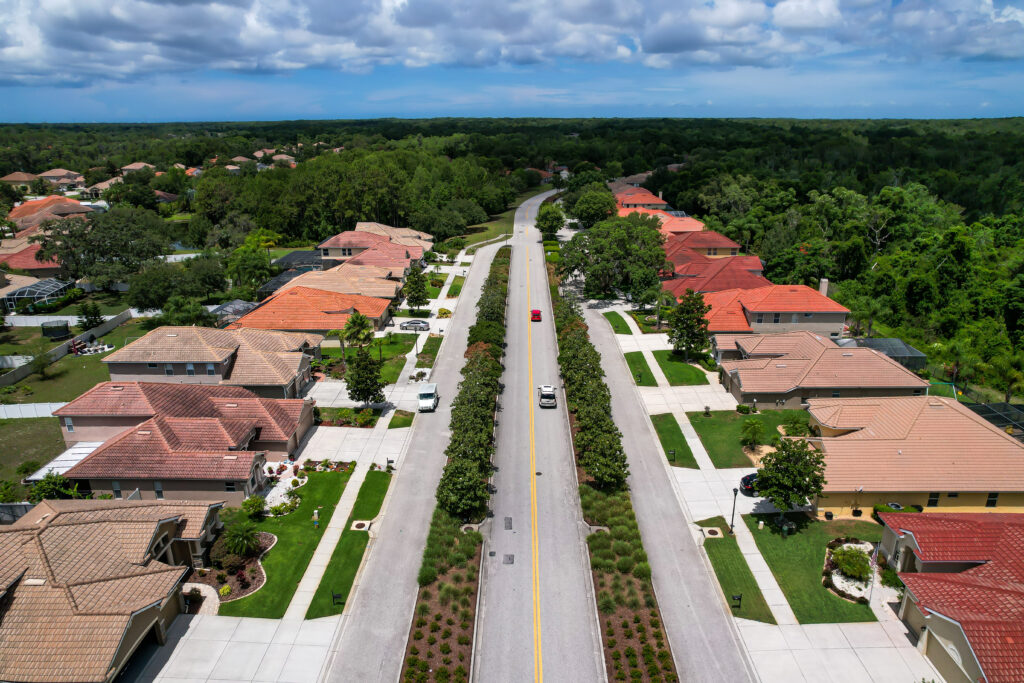
Most properties in the Tampa Bay area fall into Zone 2, where the market has found a more balanced equilibrium, often referred to as a “gentleman’s market.” Here, both buyers and sellers have some give and take, allowing for more traditional negotiations. While still active, these properties don’t typically ignite the same frenzied bidding wars as Zone 1.
This segment includes everything that doesn’t perfectly fit the Zone 1 criteria. Homes might be:
- Older but well-maintained.
- Lacking one or two of the highly sought-after features (e.g., no pool, slightly higher HOA).
- In good, but not necessarily A-rated, school districts.
- Priced outside the $700K-$850K sweet spot for hyper-competition.
In this balanced environment, properties typically stay on the market for the average 44-67 days, and buyers have more room to negotiate on price, closing costs, and contingencies. This is where most transactions occur without extreme measures, making it a more predictable landscape for both buyers and sellers.
If you’re considering a move to Tampa Bay, understanding the nuances of community fees is crucial. HOA or No HOA? What Every Tampa Bay Relocator Gets Wrong offers a deep dive into the full spectrum of HOAs and CDDs, which can significantly impact your monthly housing costs and overall buying strategy.
Zone 3: Buyer’s Opportunity & Distressed Properties
This is where the most significant opportunities lie for buyers willing to put in some work or consider properties with specific challenges. Zone 3 encompasses homes that are distressed, outdated, or have unique issues that deter the average buyer, leading to less competition and more aggressive negotiating power.
Key characteristics of Zone 3 opportunities:
- Outdated or Original Condition: Properties that haven’t been updated since the 60s or 70s, requiring substantial renovation. For example, I’m currently working with clients on a condo purchased for around $700,000 that needs about $100,000 in renovations, but will immediately see that value and equity upon completion. Beautifully remodeled comps were selling for $850,000.
- Distressed Properties: Homes that have experienced issues like flooding or require significant repairs. I recently helped clients purchase a two-story house on the water in New Port Richey that had about 12 inches of water on the bottom floor. Despite this, it was a massive opportunity, and we secured it for $50,000 under asking price with seller concessions, including my commission. This type of property allows buyers to secure prime locations and footprints they couldn’t otherwise afford, then customize it to their dreams.
- Price Cuts: These are the properties you’ll hear about in the media, where price reductions are more common because they don’t fit the move-in ready mold. If you’re willing to compromise on immediate move-in readiness, you can find unique deals, even for larger 4-bedroom homes with pools.
For those willing to undertake a renovation, the potential for immediate equity and securing a prime location is immense. It’s about recognizing that a property’s current condition doesn’t define its ultimate value, especially in desirable areas.

The Three Questions Every Relocating Buyer Needs to Answer
Navigating these split market realities requires a clear strategy, especially if you’re relocating to Tampa Bay. Before you dive into the search, I recommend asking yourself these three critical questions:
What are your non-negotiable criteria?
This isn’t just about bedrooms and bathrooms. It’s about those specific features that, if missing, would make a house a deal-breaker. Is a pool absolutely essential? Do you need to be in an A-rated school district? Is a minimal HOA or no CDD a must-have? Clearly defining these will help you understand which market zone you’ll primarily be competing in.
For many of my clients, a 4-bedroom house with a pool and A-rated schools is the top priority, which often puts them squarely in Zone 1. However, if you can be flexible on just one or two of these, your options broaden significantly.
How much renovation are you willing to undertake?
Your answer to this question directly impacts whether you can tap into the significant opportunities in Zone 3. Are you comfortable with cosmetic updates, or are you prepared for a full gut renovation? The more work you’re willing to do, the less competition you’ll face, and the more aggressive your offers can be. This can be the key to securing a dream location or a larger footprint that would otherwise be out of reach.
What is your timeline and financial flexibility?
Aggressive offers in Zone 1 often require quick decisions, substantial cash reserves (for appraisal gaps), and sometimes waiving contingencies. If you need to sell your current home before buying, your offer might be weaker in competitive scenarios. Conversely, pursuing Zone 3 opportunities might mean a longer closing process and additional funds allocated for post-purchase renovations.
Understanding your financial bandwidth, including potential renovation costs, and your timeline will help us craft the most effective strategy for your specific situation. It’s important to factor in all costs, including the often-overlooked aspect of home insurance. For a comprehensive overview, check out Tampa Florida Home Insurance Just Changed — Here’s What You Need to Know Before You Buy, published on March 22, 2026, which outlines crucial updates impacting buyers.
Tampa Bay’s Market Dynamics at a Glance
To further illustrate the current market, here’s a snapshot of key data points and how the three zones compare:
| Market Metric / Zone | Zone 1: Still Hot (Move-in Ready, Great Schools) | Zone 2: Balanced (Everything Else) | Zone 3: Buyer’s Opportunity (Distressed/Outdated) |
|---|---|---|---|
| Competition Level | Very High (multiple offers, over asking) | Moderate (gentleman’s market) | Low (aggressive offers possible) |
| Days on Market | Under 10 days (often first week) | 44-67 days average | Longer (often 100+ days) |
| Price Range | $700K – $850K (most competitive) | Varies widely | Often 5-15% below market for similar updated homes |
| Inventory | Limited for specific criteria | Adequate, growing | Higher, especially for older homes |
| Negotiation Power | Low for buyers (aggressive tactics needed) | Balanced (room for concessions) | High for buyers (price cuts, concessions) |
| Examples | 4-5 bed, pool, minimal HOA/no CDD, A-schools | Standard resale homes | Original condition condos, flood-affected homes |
Median prices in submarkets like Pasco County currently hover around $340,000, often with seller concessions. This indicates that even with overall market shifts, the specific criteria for Zone 1 properties create a micro-market of intense demand.

Navigating Location Choices
Your choice of location will always be paramount, whether you’re seeking the vibrant city life or the quieter pace of the suburbs. The Tampa Bay area offers a diverse range of communities, each with its own advantages. For some, being on the water in New Port Richey, even with a property requiring work, is the ultimate dream. For others, a master-planned community closer to Tampa might be the ideal fit.
It’s not just about proximity, but also about the lifestyle each area offers. My experience has shown that what one client considers a perfect location, another might find too far or too close. The decision often comes down to balancing commute times, access to amenities, and the specific community vibe you’re seeking. To help you weigh these options, Close to Tampa or Far From It? Here’s How to Actually Decide, published on February 27, 2026, breaks down the real tradeoffs.
Key Takeaways
- Tampa Bay’s market is segmented: It’s split into three distinct zones: highly competitive (move-in ready, specific features), balanced (most properties), and buyer’s opportunity (distressed/outdated).
- Competition is fierce for specific homes: Properties priced between $700K-$850K with 4-5 beds, a pool, minimal HOA/no CDD, and in top school districts are attracting multiple offers, often over asking with waived contingencies.
- Inventory is increasing, but not uniformly: Overall inventory is up ~18% year-over-year, and days on market are 44-67 days, but this doesn’t alleviate the pressure for highly desirable homes.
- Condo/townhome prices are declining: Condo and townhome prices are down approximately 12% year-over-year, presenting potential opportunities, especially if you’re willing to renovate.
- Significant opportunities exist for savvy buyers: Properties requiring renovation or with some form of distress (like the Pasco County median around $340K with seller concessions) offer substantial negotiation power and the potential for immediate equity growth.
Should You Target a Move-in Ready or Opportunity Property?
A move-in ready home (Zone 1 or 2) might be right for you if you prioritize:
- Immediate occupancy with no renovation stress.
- Specific, highly desirable features like a pool and top schools.
- Predictable costs without unexpected repair expenses.
An opportunity property (Zone 3) might be better if you prioritize:
- Securing a prime location or larger property at a lower price point.
- Building immediate equity through renovation.
- Customizing a home to your exact specifications.
- Facing less competition and having stronger negotiation power.
Frequently Asked Questions (FAQ)
Q: What specific criteria make a Tampa Bay home highly competitive right now?
A: Homes become highly competitive when they are move-in ready, feature 4-5 bedrooms with a pool, are located in desirable areas with excellent schools (like near Steinbrenner High), and have minimal HOA fees or no CDD. These properties, particularly in the $700,000 to $850,000 range, often receive multiple offers, sometimes requiring buyers to go over asking price and waive contingencies.
Q: Are condo and townhome prices still dropping in Tampa Bay?
A: Yes, based on recent data, condo and townhome prices in the Tampa Bay area have seen a decline of approximately 12% year-over-year. This trend suggests that this segment of the market may offer more opportunities for buyers, especially those looking for properties that might benefit from renovation.
Q: How can I find a good deal in the current Tampa Bay housing market?
A: The best deals are often found in what I call ‘Zone 3’ properties – those that are distressed or outdated and require renovation. By being willing to undertake some work, you face less competition and gain significant negotiation power, potentially securing properties $50,000 or more under asking price, even in desirable locations like waterfront areas in New Port Richey.
Q: What is the typical ‘days on market’ for homes in Tampa Bay?
A: Across most Tampa Bay submarkets, the average days on market currently ranges from 44 to 67 days. However, this average can be misleading; highly competitive, move-in ready homes in Zone 1 often sell within the first week, while distressed or outdated properties in Zone 3 can sit for 100 days or more.
—
Watch the Full Video
For more insights, watch the complete video: The Tampa Bay Housing Market Just Split in Two
—
Making Your Move Easier
Moving forward does not have to be overwhelming. With the right guidance and support, you can navigate this journey smoothly. My team and I are ready to help you every step of the way.
Here’s how to get in touch:
📧 Email: info@livingintampafl.com
📞 Phone: (727)677-5337
💻 YouTube: Living in Tampa FL